Hydro Jetting for Stubborn Drain and Sewer Clogs
Hydro jetting clears grease, scale, sludge, and roots from drain lines. Learn when it is the right answer for recurring clogs and sewer backups at home.
Blog posts of what is new that we want to share with the public.
Hydro jetting clears grease, scale, sludge, and roots from drain lines. Learn when it is the right answer for recurring clogs and sewer backups at home.
A toilet that keeps rising after you flush. Water spreading across a basement floor. A kitchen sink that suddenly will not drain when guests are on the way. When you need an emergency plumber in Allentown, the problem is rarely just a pipe or fixture. It is the stress of not knowing whether the water will stop, whether sewage is involved, and how much damage could happen before help arrives. The first goal is simple: protect people and property, then get the right diagnosis. A quick patch or a cable run may get water moving for the moment, but recurring clogs, sewer backups, and flooding often point to a larger problem that needs to be found and corrected. ## When to Call an Emergency Plumber in Allentown Not every drip requires a middle-of-the-night service call. A faucet that drips into a sink can usually wait until regular hours. But water that cannot be controlled, drains that are backing up into the home, and a loss of essential plumbing service deserve immediate attention. Call for emergency service when sewage is coming up through a floor drain, toilet, tub, or shower. Sewer water can carry contaminants, damage finishes, and make parts of your home unsafe to use. If multiple fixtures are clogged or backing up at once, the issue is often in the main sewer line rather than one individual drain. A burst or actively leaking pipe also needs fast action, especially when water is reaching electrical equipment, ceilings, walls, or finished floors. The same goes for a water heater that is leaking heavily, a well system that has left the property without water, or a commercial drain problem that threatens sanitation or forces a business to close. For landlords and property managers, timing matters even more. One overflowing drain can affect several units, create a tenant safety concern, and turn into a much larger restoration bill if it is left until morning. ## What to Do Before the Plumber Arrives You do not need plumbing experience to limit damage. Stay calm, avoid using the affected fixtures, and take a few safe steps while help is on the way. If you can do so safely, shut off the water source. For a toilet overflow, close the small valve behind or below the toilet. For a fixture leak, use that fixture’s shutoff valve. If a pipe has burst or you cannot identify the source, turn off the main water valve to the building. Do not force a stuck valve or take risks around standing water and electricity. For sewer backups, stop running water anywhere in the house. Do not flush toilets, run the dishwasher, start laundry, or take a shower. Every gallon sent into the drainage system can add to the backup. Keep children and pets away from contaminated water, and avoid trying to clear sewage with chemical drain cleaners. A few details can help the technician arrive prepared: note which fixtures are affected, whether the problem has happened before, and whether you hear gurgling, smell sewer gas, or see water near a cleanout. Photos can be useful if they can be taken without getting near sewage or unsafe water. ## Why a Drain Snake Is Not Always the Answer A standard drain cable has an important place in plumbing. It can break through a localized clog and restore flow in many situations. But if your drains repeatedly slow down, back up after a recent snaking, or clog again within weeks, the line may not have been fully cleaned. Grease, soap residue, paper buildup, scale, and sludge can cling to pipe walls. A cable can punch a hole through that material while leaving most of it behind. That is why the drain appears fixed, then quickly becomes a problem again. Tree roots are another common issue in older sewer lines. They can enter through small openings, catch debris, and gradually form a blockage that a basic snake may only partially cut. For difficult drain and sewer problems, [hydro jetting](https://www.bagoplumbing.com/services.html#hydro-jetting) may be the better solution. This method uses controlled high-pressure water to scour buildup from the inside of a pipe and remove debris more thoroughly. It is not appropriate for every line or every pipe condition, which is why an experienced technician should assess the situation first. If a pipe is severely damaged, collapsed, or improperly connected, aggressive cleaning alone will not create a lasting repair. The right answer depends on what is actually happening underground or behind the wall. That is why a clear diagnosis matters more than guessing. ## The Warning Signs of a Main Sewer Problem A clogged bathroom sink is inconvenient. A main sewer blockage can disrupt the entire property. Knowing the difference can help you act before wastewater reaches finished areas. Watch for a combination of symptoms: toilets that bubble when a nearby sink drains, water appearing in a tub after a toilet flushes, several slow drains at the same time, or a basement floor drain that backs up during laundry. Persistent sewer odor, wet areas near the sewer line, and clogs that return despite prior service can also point to a deeper issue. In Allentown and across the Lehigh Valley, homes and commercial buildings vary widely in age and plumbing layout. Older lines may have root intrusion, deteriorated joints, or years of buildup. Newer properties are not immune either. Construction debris, poor drain habits, heavy grease use, and foreign objects can create sudden blockages in almost any system. A technician should explain what was found, what equipment is needed, and whether the repair is intended as a temporary restoration of flow or a long-term correction. You deserve a direct answer, especially when the job involves your sewer line, water supply, or a major installation. ## Emergency Plumbing Is About More Than Stopping Water Fast service is essential, but speed without care can create another problem. An emergency repair should protect the home or business now while considering what will prevent the next failure. Sometimes that means [clearing […]
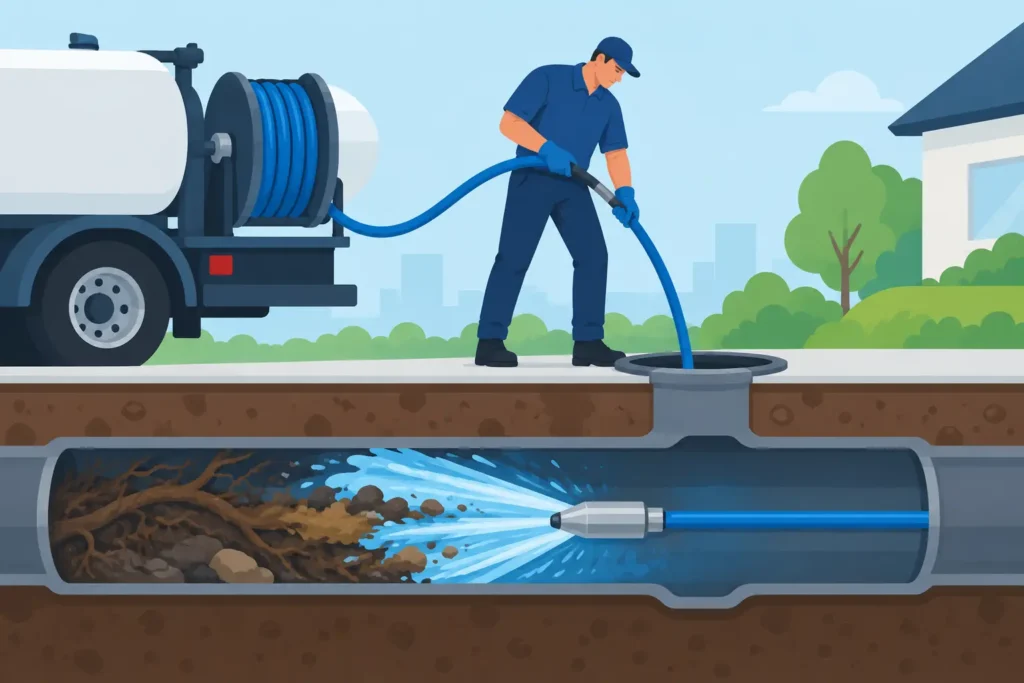
When a toilet bubbles after the washing machine drains, the kitchen sink backs up again, or sewage starts creeping toward the basement floor drain, stress builds fast. Hydro jetting is often the right next step when a basic cable machine has opened the line temporarily but the clog keeps coming back. It does not just punch a hole through a blockage. It cleans the inside of the pipe with controlled, high-pressure water. For homeowners, landlords, and commercial property operators in the Lehigh Valley, that difference can mean fewer repeat calls, fewer messy backups, and a clearer picture of what is actually happening underground. What Hydro Jetting Does Differently A standard drain snake, also called a cable machine, is a valuable tool. It can break through many obstructions and restore flow quickly. But if a sewer line is coated with grease, soap residue, mineral scale, sludge, or root growth, the cable may leave most of that buildup attached to the pipe walls. Water starts moving again, but the narrowed pipe is still there. Another clog can follow weeks or months later. Hydro jetting uses a specialized hose and nozzle to send water through the drain line at pressures selected for the pipe and the problem. The forward jets help the hose travel through the line while rear-facing jets scour debris back toward the access point. A technician works the line carefully to remove buildup rather than simply forcing a passage through it. This makes hydro jetting especially effective for recurring blockages. In a restaurant or commercial kitchen, grease can harden along the line. In an older home, years of soap, paper, sediment, and scale can reduce the usable diameter of a drain. Outside, tree roots can enter through small joints or cracks and catch toilet paper and debris. These are cleaning problems, not just one-time clog problems. When a Drain Needs More Than Snaking A slow drain is not always a hydro jetting job. A simple bathroom sink clog near the trap may be handled with a smaller cable or by clearing the local obstruction. The bigger concern is a pattern: multiple fixtures draining slowly, repeated main-line clogs, backups after heavy water use, or a drain that was supposedly cleared but failed again soon afterward. Pay attention to warning signs such as sewage odors around drains, gurgling toilets, water backing up in a tub when another fixture runs, or a floor drain that overflows during laundry. These symptoms can point to a restriction farther down the system, often in the building sewer or main drain line. For property managers, the pattern may be even clearer. The same unit has repeated kitchen backups. A shared restroom line closes a business during busy hours. Tenants report odors that come and go. Repeated emergency snaking may restore service, but it can become an expensive cycle if the buildup causing the issue is never removed. A professional diagnosis matters because symptoms can overlap. A clog, a sagging sewer line, a broken pipe, an improperly sloped section, or a municipal sewer issue can all affect drainage. The right repair starts by identifying which one you are dealing with. Is Hydro Jetting Safe for Older Pipes? This is the question homeowners should ask, especially in older parts of Allentown, Bethlehem, Easton, and surrounding communities where sewer systems may have decades of history behind them. Hydro jetting is powerful equipment, and it should never be treated as a one-size-fits-all service. When performed by a trained technician, the water pressure and nozzle are chosen based on the line material, pipe condition, diameter, and blockage. Before aggressive cleaning, a sewer camera inspection may be recommended to look for cracked pipe, failed joints, severe corrosion, offsets, or a collapsed section. If a pipe is already structurally compromised, cleaning will not repair it. In some cases, jetting can reveal damage that was hidden behind buildup, but that damage was already present. The trade-off is straightforward: a cable may provide a quicker, less intensive opening when the blockage is minor, while hydro jetting may provide a more complete cleaning when the line is packed with debris or roots. If the pipe is broken or collapsed, neither option is the permanent answer. Repair or replacement may be needed instead. That is why honest recommendations matter. The goal is not to sell the biggest service. It is to use the equipment that gives your drain system the best chance of staying open safely. How the Hydro Jetting Process Works The work usually begins at a cleanout, which is an access point to the drain or sewer line. If the line is fully blocked, the technician may first need to create an opening with a cable machine so water and debris have a path out. A camera inspection can then help locate the issue and show how much buildup remains. Next, the hydro jetting hose is guided through the pipe. The technician controls the process from the access point, adjusting technique as the nozzle moves through grease, roots, scale, or accumulated sludge. The water breaks up and flushes loosened material out of the system. After cleaning, another camera inspection can be useful. It can confirm improved flow and show whether roots, cracks, joint separation, or other pipe defects still need attention. Seeing the condition of the line helps take guesswork out of the decision. The process is not a do-it-yourself project. Rental pressure equipment can damage plumbing, flood a property, or push contaminated water into the wrong place when used incorrectly. Sewer cleaning requires the right tools, protective procedures, and a technician who understands how a drainage system is laid out. Hydro Jetting for Roots, Grease, and Commercial Drains Tree roots are one of the most frustrating causes of repeat sewer backups. Roots naturally seek moisture, and even a small opening in a sewer joint can attract them. Once inside, they expand into a net that traps paper and waste. Hydro jetting can cut through and remove many root masses, restoring flow more thoroughly than […]